IoT Security Challenges
1. what is IoT Security Challenges?
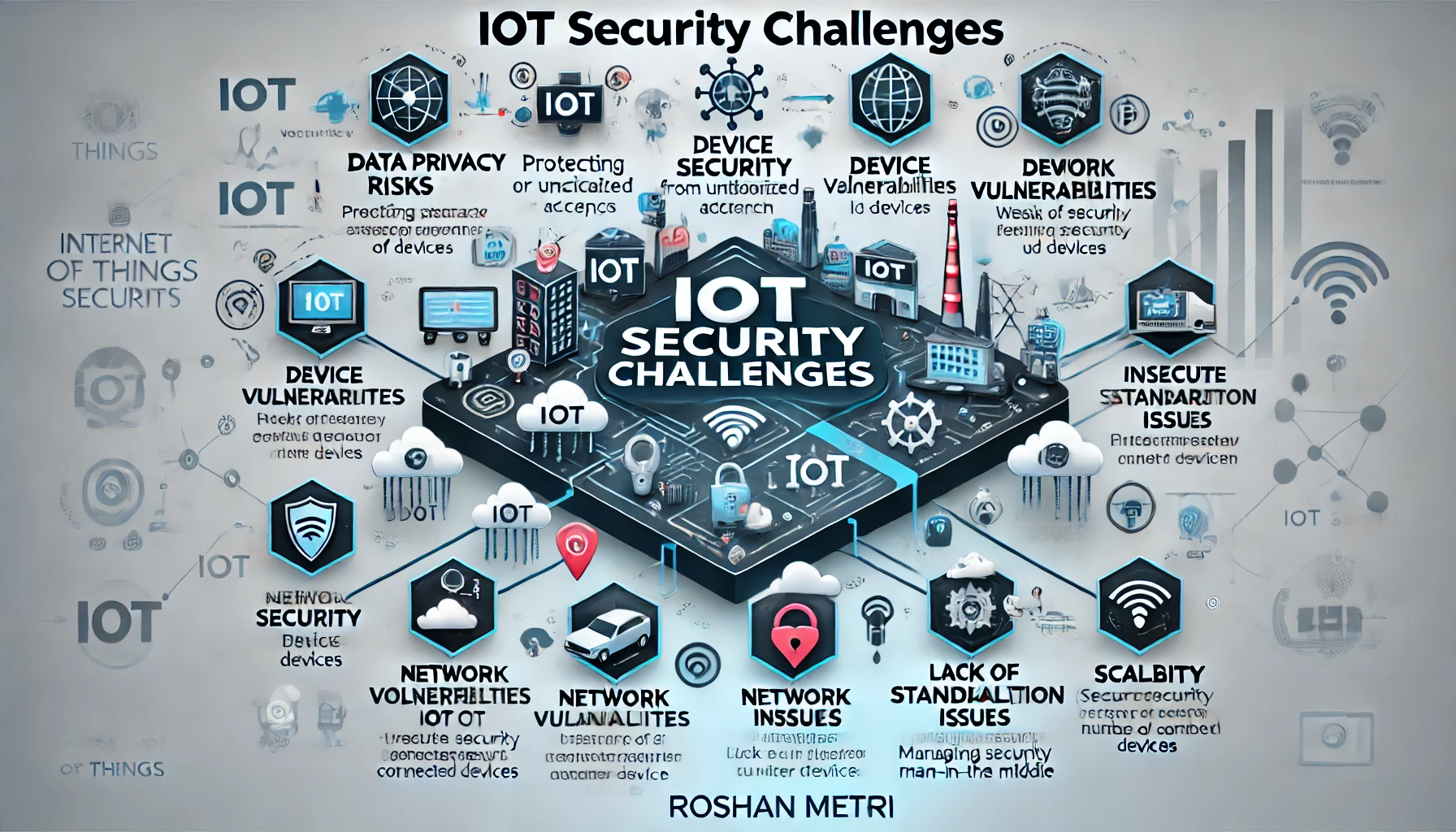
IoT Security Challenges refer to the various risks and vulnerabilities that arise when connecting smart devices to the internet. One major challenge is the lack of standard security protocols across different IoT devices. Many devices are manufactured without proper security features, making them easy targets for cyberattacks. Weak authentication methods, like using default or simple passwords, further increase the risk of unauthorized access. Since IoT devices are often designed for convenience rather than security, hackers can exploit these vulnerabilities to gain control, steal sensitive data, or disrupt services.
Another significant challenge is data privacy and protection. IoT devices collect and transmit large amounts of personal and operational data, which can be intercepted if not properly encrypted. Without strong encryption standards, sensitive information like medical records, financial data, and home security details can be exposed. Additionally, many IoT devices store data on third-party cloud platforms, increasing the risk of data breaches. The constant flow of data between devices and networks requires robust encryption and access controls to ensure that information remains private and secure.
Scalability and device management also pose challenges in IoT security. As the number of connected devices grows, monitoring and updating each one becomes difficult. Many IoT devices lack the ability to receive security patches and firmware updates, leaving them vulnerable to emerging threats. Moreover, IoT networks often integrate with traditional IT systems, creating more entry points for attackers. Without proper device management, regular security updates, and continuous monitoring, IoT ecosystems become vulnerable to large-scale cyberattacks such as Distributed Denial of Service (DDoS) attacks, which can cause significant disruptions and compromise sensitive data.
2.Data Privacy Issues
Data Privacy Issuesrefer to the challenges and risks related to the collection, storage, and sharing of personal information. With the increasing use of digital platforms, organizations collect vast amounts of user data, including personal, financial, and behavioral information. One major concern is the misuse or unauthorized access to this data. If companies fail to implement strong security measures, sensitive information can be leaked, leading to identity theft, financial fraud, or reputational damage. Additionally, many users are unaware of how their data is being collected and used, raising ethical concerns about transparency and informed consent.
Another significant data privacy issue is the lack of control individuals have over their personal information. Many online services require users to share data without giving them the option to manage or delete it. Companies often share or sell this data to third parties for marketing purposes without clear user consent. This can lead to invasive targeted advertising and profiling, where personal preferences and behaviors are tracked over time. Furthermore, data collected from IoT devices, social media platforms, and mobile applications is often stored indefinitely, increasing the risk of unauthorized access or misuse.
Government surveillance and regulatory gaps also contribute to data privacy challenges. In some regions, laws protecting user privacy are either weak or poorly enforced, allowing companies and governments to monitor personal activities. While regulations like the General Data Protection Regulation (GDPR) and the California Consumer Privacy Act (CCPA) aim to protect user data, many organizations struggle to comply fully. The rise of new technologies, such as artificial intelligence and cloud computing, further complicates data privacy. Without comprehensive global standards and stronger enforcement mechanisms, users remain vulnerable to data exploitation and privacy breaches.
3. Device Authentication
Device Authentication
is the process of verifying the identity of a device before granting it access to a network or system. It ensures that only authorized devices can connect, preventing unauthorized access and enhancing security. This process is crucial in environments with multiple connected devices, such as corporate networks, smart homes, and IoT ecosystems. Device authentication typically involves the use of unique identifiers, digital certificates, or cryptographic keys to confirm the legitimacy of a device. By validating devices, organizations can prevent data breaches, unauthorized surveillance, and malicious attacks.
One common method of device authentication is through Public Key Infrastructure (PKI), which uses digital certificates to verify a device’s identity. Each device is assigned a unique certificate issued by a trusted authority. When the device attempts to access a network, it presents its certificate, which is validated against the issuing authority. Another method involves Multi-Factor Authentication (MFA), where a combination of credentials—such as passwords, hardware tokens, or biometric data—is used to verify the device. This approach adds an extra layer of security, reducing the risk of unauthorized access.
Device authentication is especially important in the Internet of Things (IoT), where millions of devices are interconnected. Without proper authentication, malicious devices can infiltrate networks, leading to data theft or service disruption. Implementing robust authentication mechanisms, such as Mutual Authentication, where both the device and the network validate each other’s identity, helps prevent these risks. As cyber threats continue to evolve, device authentication remains a critical security measure, ensuring that only verified and trusted devices can access sensitive systems and information.

4.Firmware Security
Firmware Security refers to protecting the low-level software that controls a device’s hardware components. Firmware is essential because it manages how devices boot up, operate, and interact with other software. Since firmware operates below the operating system level, it is a prime target for cyberattacks. If compromised, malicious firmware can give attackers deep access to a device, allowing them to bypass traditional security measures, alter device behavior, or steal sensitive data. Ensuring firmware security is crucial for protecting devices such as computers, smartphones, IoT gadgets, and industrial systems.
One common approach to firmware security is secure boot, which verifies the integrity of firmware during the startup process. It ensures that only firmware signed by a trusted source is allowed to run, preventing malicious code from executing. Another method is firmware encryption, which protects firmware code from being tampered with or reverse-engineered. Additionally, firmware updates must be securely delivered and verified to patch vulnerabilities and enhance protection against emerging threats. Regular monitoring and auditing of firmware also help identify potential risks and unauthorized modifications.
Firmware attacks can be particularly dangerous because they often go undetected by traditional antivirus software. For example, attackers may implant firmware rootkits that persist even after reformatting a device. To mitigate these risks, manufacturers and organizations implement hardware-based security features like the Trusted Platform Module (TPM) and Platform Firmware Resilience (PFR) to monitor and safeguard firmware integrity. As technology advances, maintaining robust firmware security is essential to protect devices, user data, and critical infrastructure from advanced cyber threats.

5.IoT Botnets
IoT Botnets
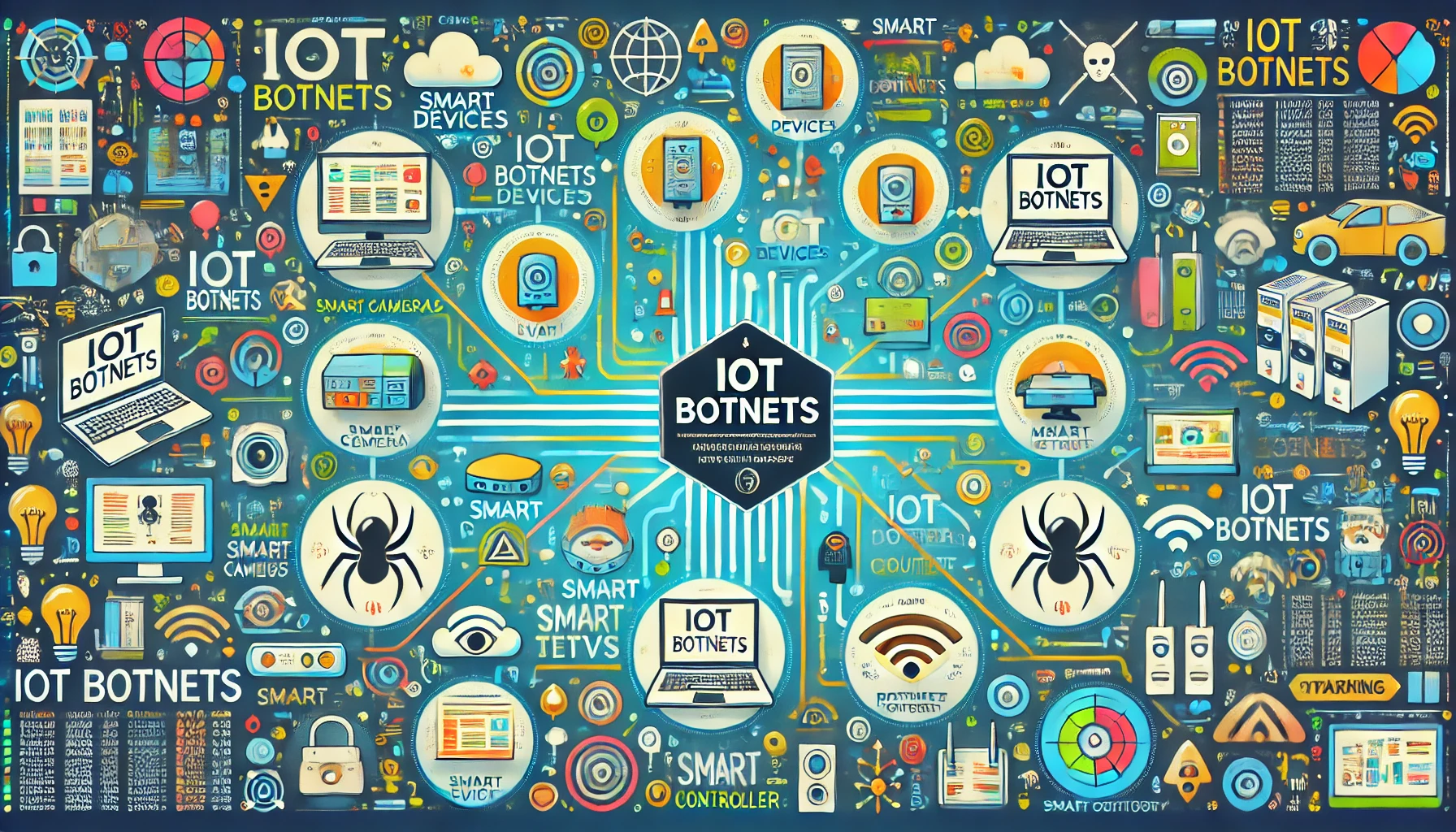
are networks of compromised Internet of Things (IoT) devices controlled by a malicious actor. These devices, including smart cameras, routers, wearables, and home assistants, are often vulnerable due to weak security measures like default passwords and outdated firmware. Cybercriminals exploit these weaknesses to infect and take control of IoT devices, turning them into "bots" that work together to launch large-scale cyberattacks. IoT botnets pose a significant threat to global cybersecurity, as they can be used for Distributed Denial-of-Service (DDoS) attacks, data theft, and spreading malware.
One of the most notorious IoT botnets was the Mirai botnet, which targeted poorly secured IoT devices. It caused massive internet outages by flooding websites and servers with malicious traffic. Attackers use automated scripts to scan for IoT devices with default or weak credentials, gaining access and recruiting them into the botnet. Once a device is infected, it can be remotely controlled to perform malicious activities without the owner’s knowledge. This allows attackers to conduct large-scale attacks with minimal effort while staying hidden.
To prevent IoT botnet infections, it is essential to follow best security practices. This includes changing default passwords, regularly updating firmware, and disabling unnecessary remote access. Network monitoring tools can detect unusual traffic patterns that may indicate an IoT botnet infection. Implementing firewalls and Intrusion Detection Systems (IDS) can also help block malicious traffic and protect IoT devices from compromise. As IoT adoption increases, securing these devices against botnet threats is crucial to maintaining safe and resilient digital infrastructure.
6.Security Patching
Security Patching
is the process of updating software, operating systems, or firmware to fix vulnerabilities, bugs, and security weaknesses. These patches are released by software vendors to address newly discovered threats and protect systems from cyberattacks. Without regular security patching, devices and networks become easy targets for hackers, increasing the risk of data breaches, malware infections, and system compromise. Patches can range from minor updates to critical fixes that prevent severe security exploits
Timely security patching is essential to maintaining a safe digital environment. Cybercriminals actively search for unpatched systems to exploit known vulnerabilities. For instance, the infamous WannaCry ransomware spread globally by exploiting a vulnerability in unpatched Windows systems. Organizations must implement a structured patch management process to regularly identify, test, and apply security updates across their infrastructure. This helps to close security gaps and reduce the risk of cyberattacks.
A robust patch management strategy involves automated patch deployment, regular vulnerability assessments, and prioritizing critical updates. Security teams should monitor official vendor announcements to stay informed about new patches and ensure all systems are updated promptly. In large environments, testing patches on a small scale before full deployment helps prevent compatibility issues. Regular patching not only improves security but also enhances software performance and system stability, making it a vital component of any cybersecurity strategy.

7. Attack Surface Expansion
Attack Surface Expansion
refers to the increasing number of entry points or vulnerabilities that cyber attackers can exploit to gain unauthorized access to a system or network. As organizations adopt new technologies like IoT devices, cloud computing, and remote work setups, their attack surface grows, creating more opportunities for cyber threats. Each additional device, service, or software component introduces potential weaknesses that hackers can target. This expansion makes it challenging for security teams to monitor and protect all potential attack vectors effectively.
The rise of remote work and bring-your-own-device (BYOD) policies significantly increases attack surfaces. Employees accessing sensitive data from personal devices or unsecured networks can introduce security risks. Additionally, cloud environments and third-party integrations add more complexity by extending the infrastructure beyond traditional on-premise security boundaries. Cybercriminals exploit these new entry points using techniques like phishing, ransomware, and supply chain attacks, which can spread quickly across expanded attack surfaces.
Mitigating attack surface expansion requires a proactive approach to identifying, monitoring, and reducing vulnerabilities. Organizations can implement network segmentation, zero-trust architecture, and regular vulnerability assessments to limit exposure. Employing advanced tools like attack surface management (ASM) helps identify and track all digital assets, including shadow IT (unauthorized systems). By continuously monitoring and securing every potential access point, businesses can reduce their attack surface and improve overall cybersecurity resilience.

8.IoT Regulations
IoT Regulationsare legal frameworks and guidelines established by governments and regulatory bodies to ensure the safe, secure, and ethical use of Internet of Things (IoT) devices. These regulations address concerns related to data privacy, device security, consumer protection, and interoperability. As IoT devices become more common in industries like healthcare, smart homes, and transportation, regulations aim to reduce risks associated with data breaches, unauthorized access, and device manipulation. Countries worldwide are adopting specific laws to ensure IoT manufacturers follow standardized practices to protect user data and ensure device security.
In the United States, the IoT Cybersecurity Improvement Act of 2020 mandates that government-purchased IoT devices meet minimum security standards, such as password protection and software updates. The General Data Protection Regulation (GDPR) in the European Union also applies to IoT, requiring companies to ensure user data collected by these devices is encrypted and stored securely. Additionally, the Cyber Resilience Act (CRA) in the EU sets out specific guidelines to make IoT devices more resistant to cyberattacks. These regulations promote transparency by requiring manufacturers to disclose how data is collected and used.
Compliance with IoT regulations involves secure-by-design principles, meaning devices must have built-in security from the development stage. This includes enforcing firmware updates, user authentication, and data encryption. Organizations using IoT devices must perform regular audits, maintain cybersecurity policies, and adhere to data protection laws. As IoT technology evolves, regulations continue to adapt, ensuring devices are safe for consumers while protecting national infrastructure from cyber threats. Businesses that fail to comply may face legal penalties, financial fines, and loss of consumer trust.

Comments